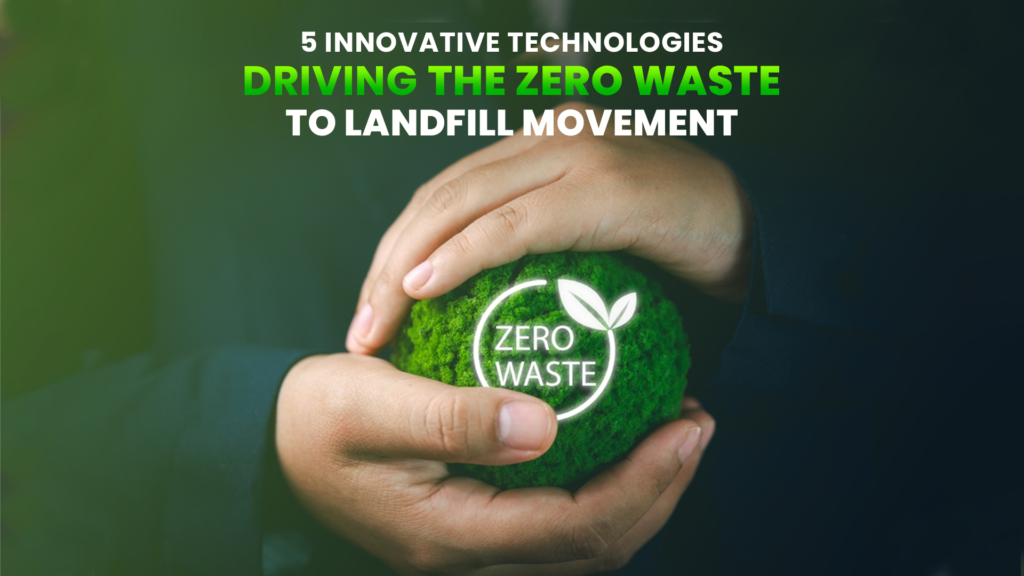
5 Innovative Technologies Driving the Zero Waste to Landfill Movement
TL;DR – Zero Waste to Landfill & 5 Key Technologies
The zero waste to landfill movement focuses on cutting landfill disposal by turning more materials into resources through advanced recycling, waste-to-energy, circular economy design, composting, and smart waste management systems. Together, these technologies reduce pollution, capture more value from materials, and move businesses and communities toward a truly zero waste to landfill future.
-
Advanced recycling technologies – AI-powered sorting, robotics, and smart recycling bins increase recovery rates for plastics, metals, paper, and complex mixed materials while reducing contamination and manual errors.
-
Waste-to-energy (WTE) plants – Use combustion, gasification, and pyrolysis to turn non-recyclable waste into electricity, heat, or fuel, reducing landfill volumes and methane emissions while using modern filtration to limit air pollution.
-
Circular economy innovations – Digital product passports, better materials recovery, and chemical recycling help keep materials in use longer, support reuse and recycling, and reduce demand for virgin raw materials.
-
Composting & organic waste solutions – Scaled composting systems and home solutions (compost bins, worm farms, etc.) divert food and yard waste from landfills, cut methane, and create high-value soil amendments.
-
Smart waste management systems – IoT-enabled bins, sensors, and data analytics optimize pickup routes, track waste generation, improve sorting, and power AI-driven smart sorting for higher recycling rates at lower cost.
For increasing the awareness of environmental issues, Zero Waste to Landfill has transformed into a global movement nowadays. The goal of this movement is to reduce landfill waste, limit defilement, support resource assurance, and develop practicality. To achieve this, advanced technologies can efficiently turn waste materials into useful resources.
In this blog, We will discuss the five creative technologies that are driving the Zero Waste to Landfill movement . To additionally foster the waste management system, increase reusing limits and plug the round economy, these developments will play fundamental roles. So, let’s go through the progressions that are refining waste organization and guarantee that we are closer to a zero waste future.
5 Innovative Technologies Leading the Zero Waste to Landfill Movement
In the worldwide push for maintainability, decreasing landfill waste has turned into a basic goal. Reaching “zero waste to landfill” needs new ideas that change our approach to using and handling waste. Various technologies are helping to minimize waste and make better use of resources. These are minimizing the environmental damage and paving the way for a sustainable future.
The following are 5 Inventive Waste Management Technologies Driving the Zero Waste to Landfill Movement:
- Advanced Recycling Technologies
- Waste-to-Energy (WTE) Technologies
- Circular Economy Innovations
- Composting and Organic Waste Solutions
- Smart Waste Management Systems
Advanced Recycling Technologies
New recycling technology has a big impact on waste processing leading to better and greener recycling. Using AI and robots works better than previous ways to improve how we sort trash, spot different materials, and get useful stuff back. AI trash sorter is a perfect example for that. It can spot the recyclables we can use like plastic, metal, and paper better and faster than humans. This process can help to cut down on pollution and make the recycling process more productive.
Robotics plays a vital role to improve recycling technology. Robots can sort trash faster than humans. And also using robots instead of humans can cause less error and better productivity. This technology can work well to handle the complex materials, like mixed plastics, which is difficult to recycle.
AI systems are now being used to create smart recycling bins. These containers sort garbage right when you toss it in. This automation helps ensure recyclable items get sorted and don’t go to waste. What’s the outcome? Trash gets divided more, and less ends up in dumps.
Waste-to-Energy Technologies
Waste-to-energy technology is a component of the Zero Waste to Landfill Initiative. It offers a solution to waste problems and at the same time produces energy. Waste materials which cannot be recycled are processed in a Waste-to-energy plant to generate electric energy, heat or fuel, thus minimizing the waste transferred to landfills. Nowadays WTE plants utilize modern combustion, gasification and pyrolysis technologies in waste conversion.
Combustion is the most known WTE technology that produces electrical energy by first burning waste material at high temperatures. Meanwhile, gasification and pyrolysis convert waste materials through chemical reactions and heat, with the outcome being synthetic gas or liquid fuel. The energy demand can be simultaneously fulfilled and the waste is reduced with the help of these technologies as well.
WTE technologies have several positive environmental aspects such as decrease in the amount of waste being landfilled and decrease in methane emissions which are the byproducts of biological waste decomposing in landfills. Besides, WTE plants are usually fitted with modern filtration systems and this results in the emission of cleaner air which is better than the use of other conventional waste disposal methods. WTE technologies are now being embraced by several nations across the globe, which translates them closer to achieving their zero waste to landfill targets while at the same time generating clean energy.
Circular Economy Innovations
Achieving zero waste to landfill will require stricter adherence to the principles of the circular economy. In the CE model, where goods and materials are used maximally, products are maintained for longer to avoid disposal or recycling. Therefore, circular economy innovations are focused on designing goods with a low environmental impact which incorporates a high reuse and recycling rate of sufficient materials eschewing the need for worsening raw material procurement conditions and waste generation.
In a circular economy, the focus is on establishing a product so that it is durable and has a longer life cycle. One such important technology is the digital product passport which keeps a record of a product throughout its life cycle, from when the input materials are brought to how it will be disposed of once it is of no use. These digital passports provide the necessary information about a product’s components, its raw materials, and the eco-friendly disposing mechanisms making it easy for one to recycle or reuse the product.
Also, there are more advanced kinds of materials recovery such as sorting systems and chemical recycling technologies. These invite companies to reclaim materials in goods that are destined to be discarded. One new invention of chemical recycling technology disassembles complex polymers into basic building blocks of monomers allowing the formation of new products without the necessity of any raw materials. These inventions assist companies in lowering their ecological impact and supporting a circular economic model.

Composting and Organic Waste Solutions
Composting is a very crucial process that aids in minimizing the amount of organic waste that is sent to landfill sites. Organic wastes like food scraps and yard waste constitute a considerable percentage of landfill waste and emit methane gas which is a strong contributor to greenhouse gases. By repurposing the organic waste and bringing it to a composting site, we are able to decrease the amount of waste that goes to the landfill and generate high quality compost that can be utilized in farming and landscaping to enhance the soil.
Lately, the technology behind composting has advanced and does not require much effort when being scaled up. Furthermore, it is necessary to mention recent composting technologies which integrate cooling and heating devices to better aerate and promote the quick biological decomposition of organic substances. In addition, there are methods of molecular disposal, which allow capturing biogas while treating organic waste for energy production purposes.
In recent years, individual home shedding solutions, such as compost bins, earthworm farms, and other composting alternatives are gaining traction as people want to join the zero waste effort and want to minimize their waste output. These technologies allow customers to convert unwanted food and other organic manners into ideal compost for their gardens thus reducing the waste shipped to landfills.
Smart Waste Management Systems
The application of smart waste management systems is changing how people collect, sort, and dispose of waste. These systems utilize various Internet of Things (IoT), sensors and data analytics technologies and manage the collection of waste optimally, follow the generation of waste, and monitor that the recyclables are properly sorted. Smart waste receptacles fitted with sensors are able to identify when they are filled to capacity and alert garbage collection agencies to eliminate unnecessary pick-up thereby reducing fuel expenditure.
Data analysis is integrated to ensure efficient waste management. Cities and municipalities can track and analyze the data from smart bins and waste tracking systems so that trends surrounding waste can be understood and reasonable decisions can be taken regarding programs such as decontamination and recycling. This has proven to be more efficient in the reuse of resources as well as less expensive while promoting a higher waste recycling rate instead of increasing the waste which goes to landfills.
Furthermore, in waste management, AI applications are capable of smart waste sorting and automatic recycling of waste materials. Technological improvements improve the processes and reduce the contamination of recycling streams and will help improve waste management systems.
Conclusion
In conclusion, the goals of the Zero Waste to Landfill movement have been made possible by the development and availability of innovative technology for waste management. The tools that are available today, for example, waste to energy tech and modern recycling systems greatly aid in reducing landfill waste and achieving sustainability. Other tools, for instance, circular economy principles, smart waste management solutions, and composting systems are also essential for landfill waste diversion and sustainability promotion.
If we continuously develop these technologies, the Zero Waste to Landfill future becomes more achievable. On the other hand, reaching this objective requires collaboration between governments, business organizations, and private citizens. Investing in and extending our support for these innovative technologies, we will be able to make our contribution to achieving a cleaner and healthier and more sustainable planet for future generations.
Also Read: Want to know everything about Plastics Recycling? Don’t forget to read one of our best articles on “Plastics Recycling: Everything You Didn’t Want to Know”
FAQs
You can add these at the bottom of the blog as an FAQ section. Use as-is, or keep just the questions if you prefer.
1. What does “zero waste to landfill” actually mean?
“Zero waste to landfill” means designing systems so that as little waste as possible is sent to landfills. Materials are reduced, reused, recycled, composted, or converted to energy instead of being buried, which cuts pollution, conserves resources, and supports a more circular economy.
2. How do advanced recycling technologies support the zero waste to landfill movement?
Advanced recycling technologies use AI, robotics, and smart sorting systems to identify and separate materials more accurately and quickly than manual sorting. This improves recycling rates, reduces contamination, and makes it possible to recover value from complex waste streams that were previously landfilled.
3. What is waste-to-energy and when should it be used?
Waste-to-energy (WTE) plants convert non-recyclable waste into electricity, heat, or fuel using processes like combustion, gasification, and pyrolysis. WTE is best used for residual waste that cannot be reused, recycled, or composted, helping reduce landfill volumes and methane emissions while generating useful energy.
4. How does the circular economy help achieve zero waste to landfill?
The circular economy keeps products and materials in use for as long as possible through design for durability, reuse, repair, and high-quality recycling. Tools like digital product passports and advanced materials recovery make it easier to track components, reclaim materials, and avoid unnecessary disposal to landfill.
5. Why is composting critical for zero waste to landfill goals?
Organic waste like food scraps and yard waste make up a major share of landfill inputs and generate methane as they decompose. Composting diverts these materials into controlled processes that create nutrient-rich compost for agriculture and landscaping, cutting greenhouse gas emissions and landfill dependency.
6. What are smart waste management systems and what problems do they solve?
Smart waste management systems use IoT sensors, connected bins, and data analytics to monitor fill levels, optimize collection routes, and track recycling performance. They reduce unnecessary pickups, lower fuel use, improve service, and increase diversion by ensuring materials are collected and sorted at the right time and place.
7. How can businesses start adopting these zero waste to landfill technologies?
Businesses can begin by auditing their waste streams, then piloting targeted solutions like AI-assisted recycling, organics diversion and composting, or smart bins in high-volume areas. Partnering with technology providers, waste management firms, and circular economy experts helps build a roadmap that aligns zero waste goals with cost savings and sustainability KPIs.
If you’d like, I can also tune the wording to match IRA’s brand voice or target specific keywords you’re aiming for (e.g., “industrial asset recovery,” “sustainable decommissioning,” etc.).